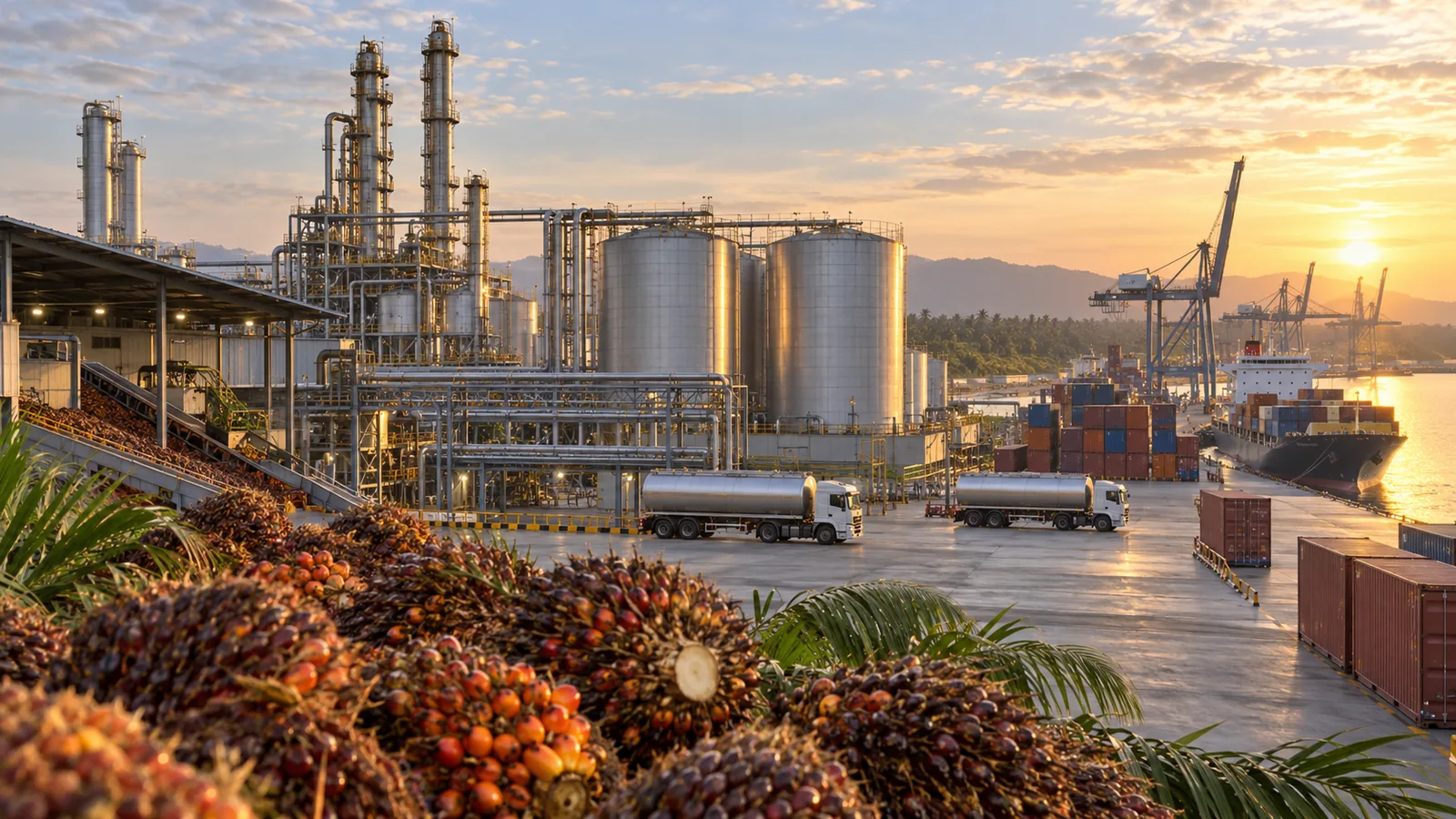

The structure of Indonesia's palm oil exports is shifting steadily away from raw materials towards value-added products. The Oil Palm Plantation Fund Management Agency (BPDP) — the state agency that collects palm oil export levies and funds replanting, research and biodiesel support — says that more than 80% of the country's palm oil exports now consist of downstream (processed) products rather than crude palm oil (CPO).
BPDP's Director of Finance, Risk Management and General Affairs, Zaid Burhan Ibrahim, presented the data at a sustainable palm oil industry event in Pangkalan Bun, Central Kalimantan, on Wednesday, 29 July 2026. His remarks were reported the same day by Kompas.com and the national news agency ANTARA.
According to Zaid, the changing export mix shows that Indonesia's downstreaming (hilirisasi) policy has enlarged the role of processed products in the national palm oil industry. The export value of palm oil commodities was put at more than US$20 billion a year, making the sector one of Indonesia's sources of foreign exchange.
From food to oleochemicals
Downstream palm products reach many sectors. In the food and pharmaceutical industries, palm oil is used to make margarine, cooking oil, bread, and vitamins A and E. In the oleochemical industry, palm-based feedstocks are used for soap, detergents, cosmetics and a range of personal-care products.
ANTARA also quoted BPDP as saying that palm derivatives are present in many everyday goods. Oil palm productivity was put at around four tonnes of oil per hectare, higher than several other vegetable-oil crops cited in the presentation. BPDP considers that this productivity makes oil palm relatively land-efficient in meeting demand for vegetable oils.
The growth of downstream products is also visible in trade with major markets. In its 2026 industry outlook, the Indonesian Palm Oil Association (GAPKI) said China imports Indonesian palm products mainly in the form of oleochemicals and refined palm oil. GAPKI also noted that the industry is moving towards higher value-added products, including specialty chemicals, bioplastics, bio-lubricants and renewable surfactants.
Value added and the production base
BPDP says around 41% of Indonesia's oil palm plantations are managed by smallholders. The agency also reports that the palm oil industry provides around 16.5 million direct and indirect jobs, from plantations to fresh fruit bunch transport, fertiliser and equipment supply, and industrial support services.
Even as downstreaming strengthens, the industry continues to face shifts in production, domestic demand, logistics costs and vegetable-oil market dynamics. In its latest outlook, GAPKI expects palm oil production growth in 2026 to be held below 2%, while domestic demand rises. Market reporting on 29–30 July also showed that CPO prices, the weather outlook and production costs remained key concerns for the industry. Price developments can be followed on GIMNI's CPO price data.
An export mix increasingly dominated by downstream products places food, refined palm oil and oleochemicals at the centre of Indonesia's palm oil trade. BPDP's data also show that the story of Indonesian palm oil exports no longer rests on crude CPO alone, but on a wide range of processed products used by industry and consumers.
Sources monitored
- Kompas.com — Tak Lagi Andalkan CPO, 80 Persen Ekspor Sawit RI Kini Didominasi Produk Hilir (in Indonesian), 30 July 2026.
- ANTARA — BPDP: Produk Turunan Sawit Selalu Ada dalam Kehidupan Sehari-hari (in Indonesian), 29 July 2026.
- Suara.com — Hilirisasi Sawit RI Diklaim Sukses, 80% Ekspor Tak Lagi Produk Mentah (in Indonesian), 29 July 2026.
- GAPKI — Prospek Industri Sawit Indonesia 2026: Dampak Kebijakan Baru terhadap Pasokan, Permintaan, dan Biaya (in Indonesian), monitored 29 July 2026.
- InfoSAWIT — Harga CPO KPBN Inacom Naik Tipis (in Indonesian), 30 July 2026.
- KONTAN — Prime Agri Resources Genjot Produksi Minyak Sawit (in Indonesian), 30 July 2026.
- KONTAN — Saham Emiten CPO Disetir Sentimen El Nino (in Indonesian), 30 July 2026.
- Mongabay Indonesia — Menyelisik Minyak Sawit dari Tesso Nilo sampai ke Pasar Global (in Indonesian), 30 July 2026.
Last updated:
Indonesian version: Lebih dari 80 Persen Ekspor Sawit Indonesia Kini Berupa Produk Hilir