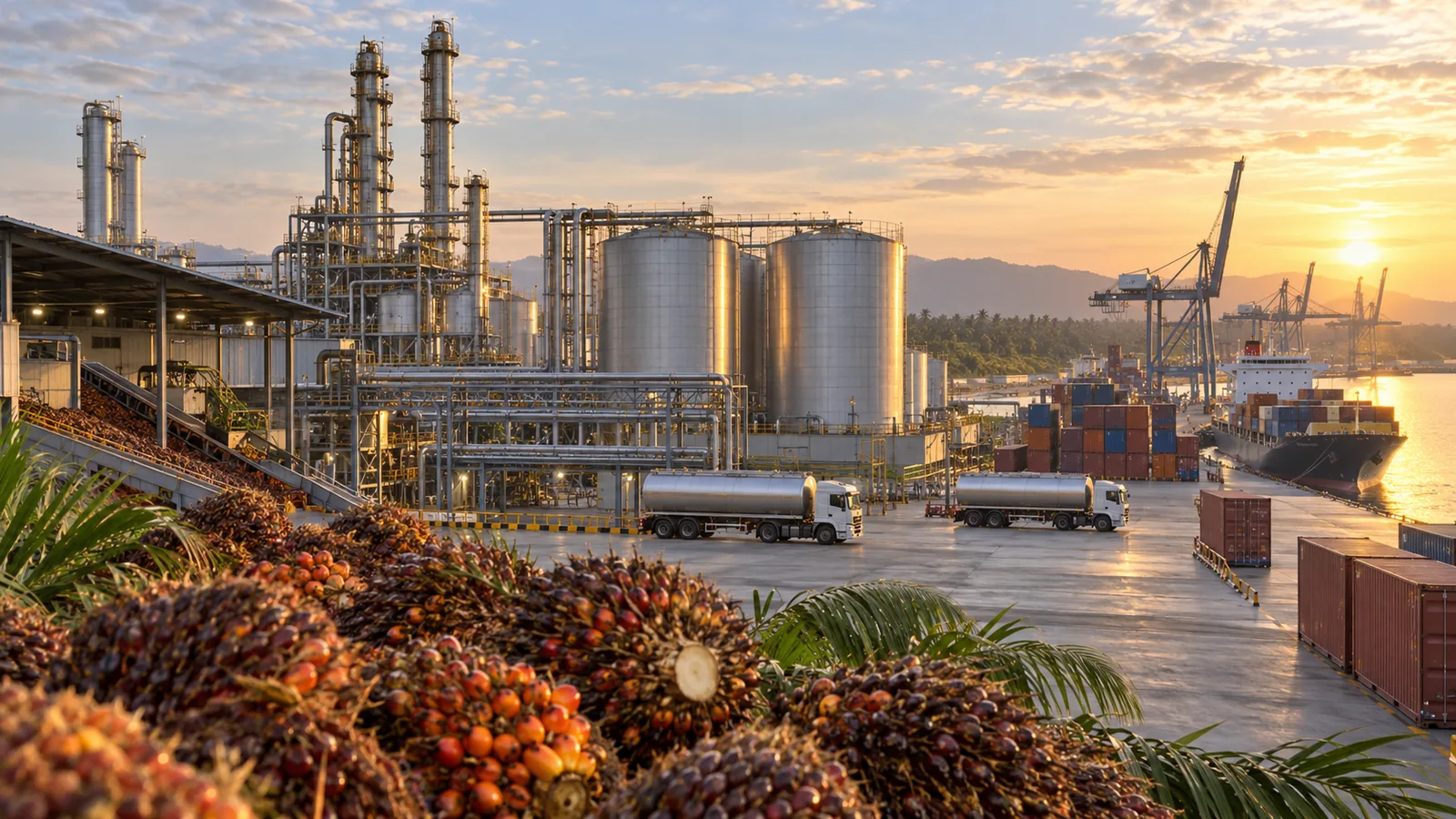
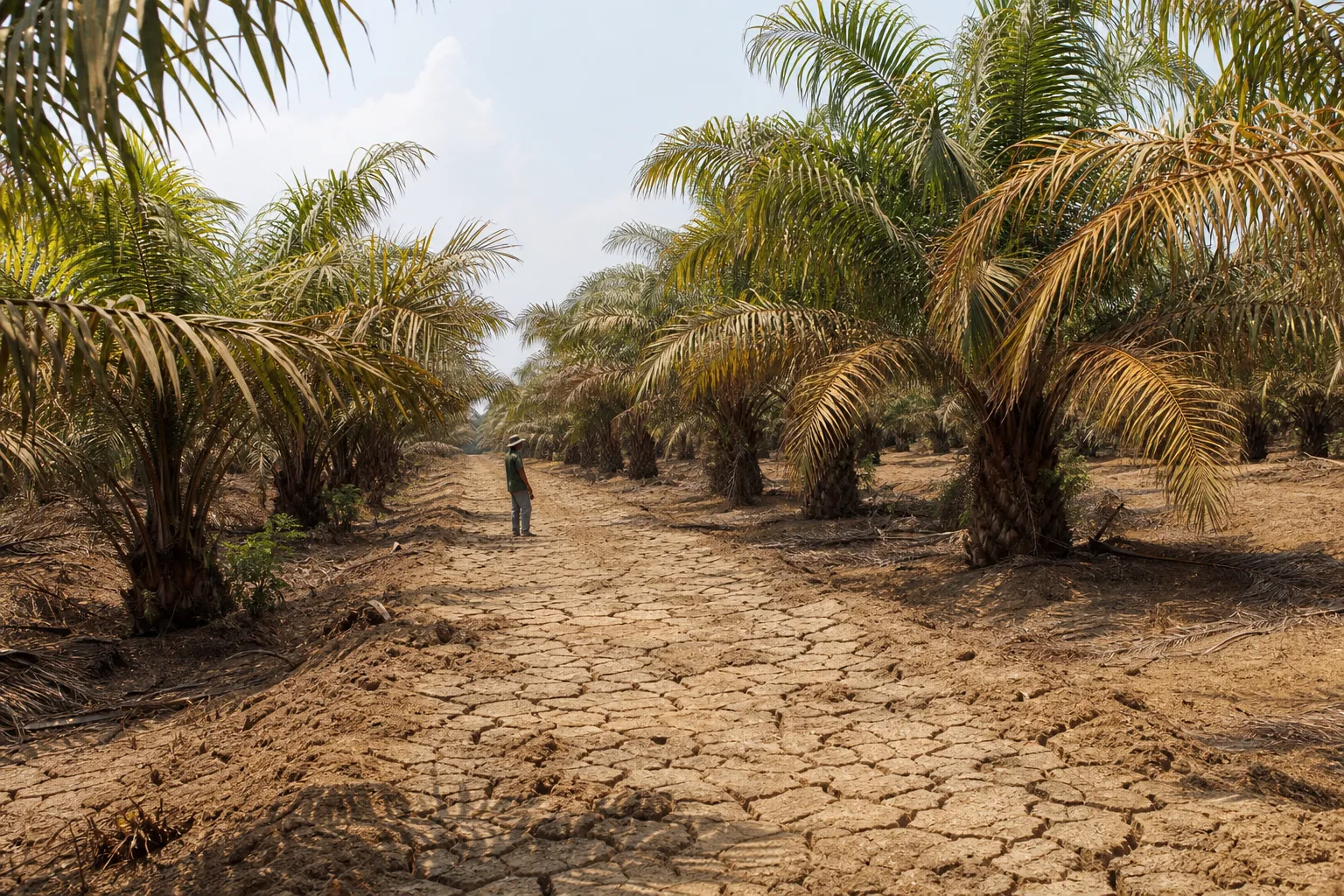
JAKARTA — Indonesia's palm oil production is projected to fall by as much as 2 million tonnes in 2026 because of El Niño and rising fertiliser costs. The threat weighs most heavily on Riau, one of the country's largest palm oil-producing provinces on Sumatra, which is facing severe drought conditions.
According to Bastille Post Global, the climate pattern — which reduces rainfall and raises temperatures — threatens the productivity of around 1.7 million hectares of smallholder oil palm in Riau.
Indonesia's meteorological agency has warned that Riau will receive below-normal to moderate rainfall until October. Several districts have reportedly already recorded very low soil moisture, while oil palms need a consistent water supply throughout their growth cycle.
Oil palm farmer Yulius Dwi said that yields which under normal conditions can reach around three tonnes per hectare per month could fall by 50–70% during extreme weather. Such a drop could cause direct financial losses for farmers.
A plantation manager in Riau, Andrei, also recalled a previous El Niño episode when monthly per-hectare production targets were missed and transport activity at collection points came to a halt.
Indonesia produced more than 51 million tonnes of palm oil in 2025. In 2026, national output is expected to fall by up to 2 million tonnes, driven mainly by El Niño and higher fertiliser costs. Related market indicators can be followed on GIMNI's CPO price data.
The meteorological agency has asked plantation managers to strengthen water-management systems and keep monitoring weather conditions until the end of 2026. The report notes, however, that smallholders have limited resources to put such measures in place.
Source: Bastille Post Global, 10 August 2026.
Last updated:
Indonesian version: El Nino Ancam Pangkas Produksi Minyak Sawit Indonesia hingga 2 Juta Ton