
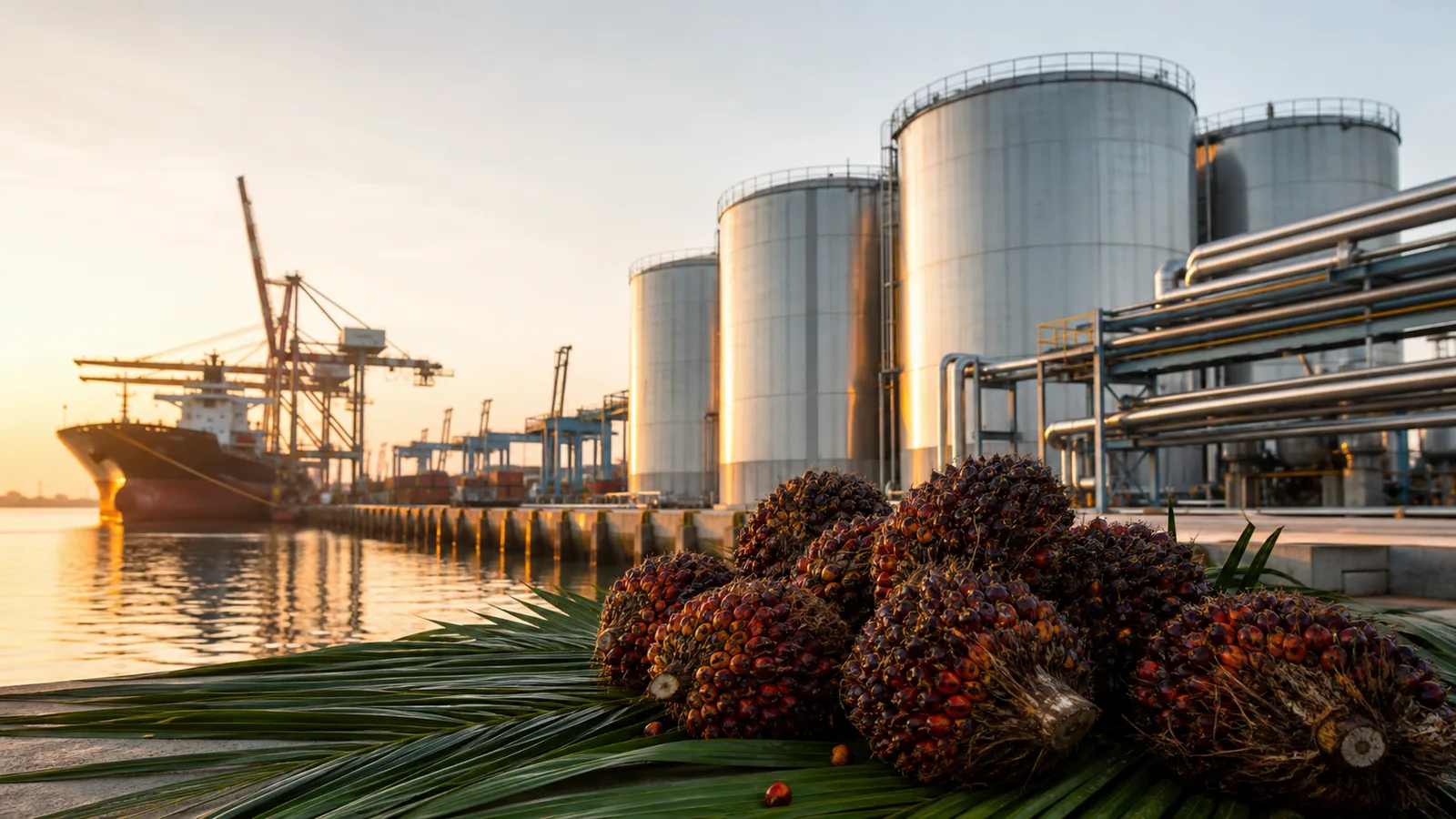
The Indonesian government has begun preparing to implement the Indonesia–European Union Comprehensive Economic Partnership Agreement (I-EU CEPA), a step reported to open wider access to the EU market for palm oil and its derivatives.
InfoSAWIT reported that Minister of Trade Budi Santoso said coordination across ministries and agencies is being accelerated. The preparations cover completing ratification documents, aligning domestic regulations and ensuring technical readiness before the agreement enters into force.
He made the statement at the I-EU CEPA Implementation Preparation Dialogue at the Coordinating Ministry for Economic Affairs in Jakarta on Friday, 21 August 2026. The meeting was chaired by Coordinating Minister for Economic Affairs Airlangga Hartarto and attended by representatives of ministries and agencies as well as ambassadors of EU member states.
Zero-tariff opportunity
According to the same report, I-EU CEPA liberalises around 98% of both parties' tariff lines, or around 99.5% of total import value. Palm oil and its derivatives are among the Indonesian goods expected to receive zero tariffs from the agreement's entry into force, together with textiles, footwear and rubber products.
Budi described the level of tariff commitment as one of the highest Indonesia has ever secured in a trade agreement. He said more competitive tariffs give Indonesian products a better chance of entering the EU.
The EU market was described as covering around 450 million consumers with a combined gross domestic product of around US$22 trillion. Beyond trade in goods, I-EU CEPA also covers market access for services, investment, trade digitalisation, faster customs procedures, cooperation on standards, and sanitary and phytosanitary issues.
European regulations remain a concern
The tariff opportunity comes alongside European market requirements. InfoSAWIT noted that the European Union Deforestation Regulation (EUDR) is a concern for the palm oil industry, alongside the Carbon Border Adjustment Mechanism (CBAM) and other sectoral rules. Readers can follow trade- and industry-related rules through GIMNI's regulations register; see also our analysis of ISPO as a path to EUDR compliance.
Budi said regulations that could reduce the benefits of I-EU CEPA can be discussed jointly by Indonesia and the EU, including any new rules that emerge after the agreement is signed.
I-EU CEPA negotiations began in 2016 and reached substantial conclusion in September 2025. The government is targeting signature in October 2026. After that, the agreement must still be ratified by each party's parliament before it can be implemented.
The EU Ambassador to Indonesia and Brunei Darussalam, Denis Chaibi, welcomed the preparatory dialogue. The Minister of Trade, for his part, stressed the importance of involving business associations and companies from the preparation stage so that the opportunities can be used once the agreement takes effect.
Source
- InfoSAWIT — I-EU CEPA Siap Buka Jalan Baru Ekspor Sawit Indonesia ke Eropa (in Indonesian), 24 August 2026.
Last updated:
Indonesian version: I-EU CEPA Buka Peluang Tarif Nol Persen bagi Sawit Indonesia